Restoring an Original Quarry Tiled Floor Following Remodel in Eltham
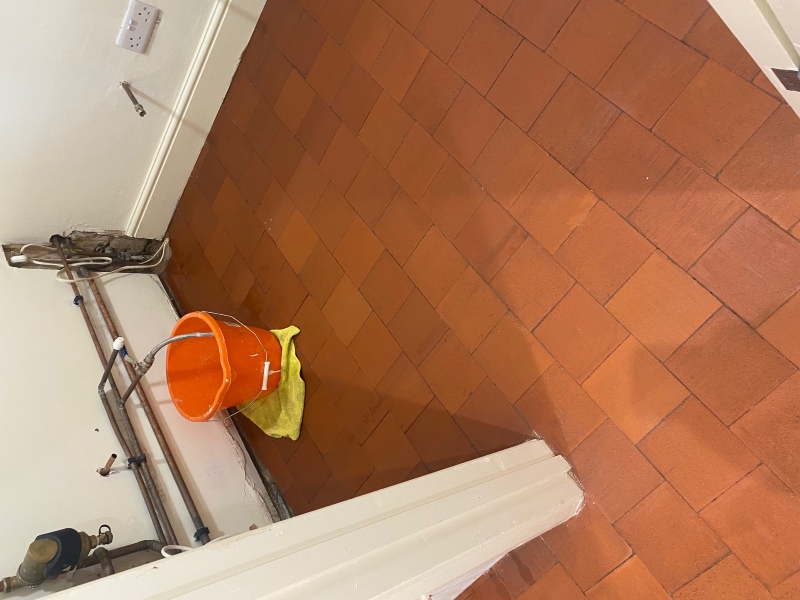
This project in Eltham, involved restoring an original quarry tiled floor in a 1930s property that was undergoing a major renovation. The homeowner was remodelling the house and had added a substantial extension to accommodate a new kitchen. As a result, the original kitchen was being converted into a ground-floor WC and utility room.
 |
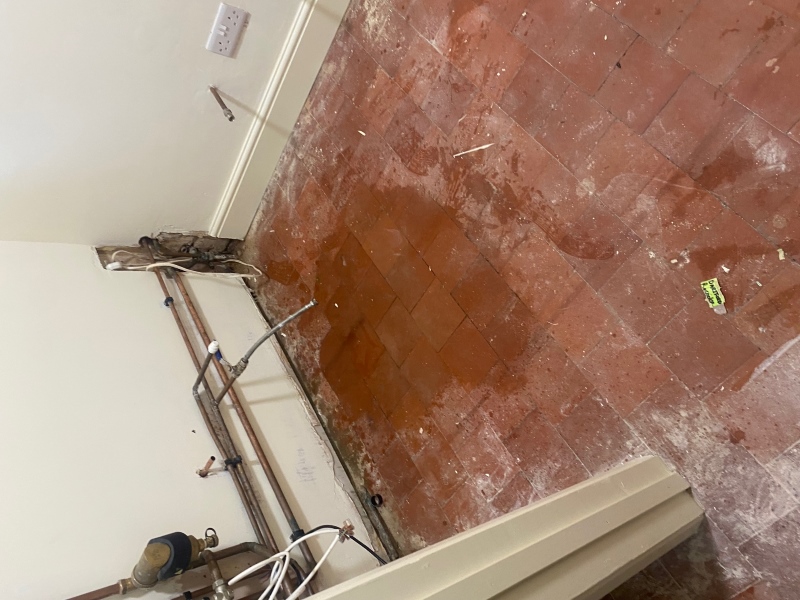 |
Rather than remove the existing floor, the homeowner wanted to preserve the original quarry tiles, which were an attractive feature of the property. However, the floor had accumulated years of wear and had been covered in places with old red tile paint and layers of sealer. These residues had left the surface looking tired and uneven, so the tiles needed a thorough deep clean before they could be sealed again.
 |
 |
Having visited the property to survey the floors and run some tests I sent over a proposal to restore the floor and bring back the natural colour of the original quarry tiles. Happy with the proposal a date was scheduled.
Removing Old Tile Paint and Sealer from Quarry Tiles
The first stage of the quarry tile restoration was to remove the old coatings. Paint and sealer residues can be particularly difficult to eliminate from traditional quarry tiles because the surface is porous and can retain traces of contamination.
To tackle this, I applied Tile Doctor Remove & Go to the entire floor and allowed it to dwell for approximately 30 minutes. This gave the specialist cleaning product time to soften the old paint, sealer and accumulated soiling.
Once the dwell time had elapsed, I worked over the tiles using a rotary floor buffer fitted with a black stripping pad. This helped break down the loosened coatings and lift the contamination from the tile surface. The resulting slurry and residue were then removed with a wet vacuum cleaner.
Removing these old coatings was an important part of the process. Any remaining paint or sealer could interfere with the application and performance of a new impregnating sealer, potentially leaving the finished floor with an inconsistent appearance.
Deep Cleaning the Quarry Tiled Floor
With the main coatings removed, the next stage was to address any remaining residues and further clean the surface of the tiles.
I applied Tile Doctor Acid Gel to the floor and worked it into the tiles using soft diamond pads. The process began with a 50-grit pad and progressed through finer grit pads until finishing on a 400-grit burnishing pad, providing a controlled method of cleaning and refining the tile surface. The floor was rinsed and the soiling extracted with a wet vacuum after each pad.
The diamond-pad treatment helped remove stubborn remnants of the old finish and improve the overall cleanliness of the quarry tiles. Working progressively through the grades allowed me to tackle the remaining contamination while achieving a suitable surface for sealing.
After this stage the floor was given a steam rinse to remove the cleaning residues. I also carefully scraped away any remaining traces of paint or old sealer that had been missed during the earlier cleaning stages.
This detailed preparation was essential to achieving a consistent result. When restoring an older quarry tiled floor, it is important to remove incompatible coatings and thoroughly rinse away cleaning residues before applying a fresh protective treatment.
Sealing the Quarry Tiles to Enhance Their Natural Colour
Once the cleaning process was complete, the floor was left to dry thoroughly before sealing.
For the final treatment, I applied three coats of Tile Doctor Colour Grow. This is an impregnating sealer designed to penetrate the tile and enhance its natural colour while providing protection against everyday dirt and spills.
Unlike a topical coating that sits on the surface, an impregnating sealer soaks into the porous material occupying the pores and preventing dirt from residing there. Colour Grow also contains a colour enhancing formula that brings out the warm, earthy tones of the original quarry tiles while helping to protect them as they begin their new life in the renovated WC and utility room.
Applying the sealer only after the floor had been properly cleaned and allowed to dry was an important part of the restoration. Good preparation helps the sealer penetrate effectively and deliver a more consistent finish.
The Finished Quarry Tiled Floor in Eltham
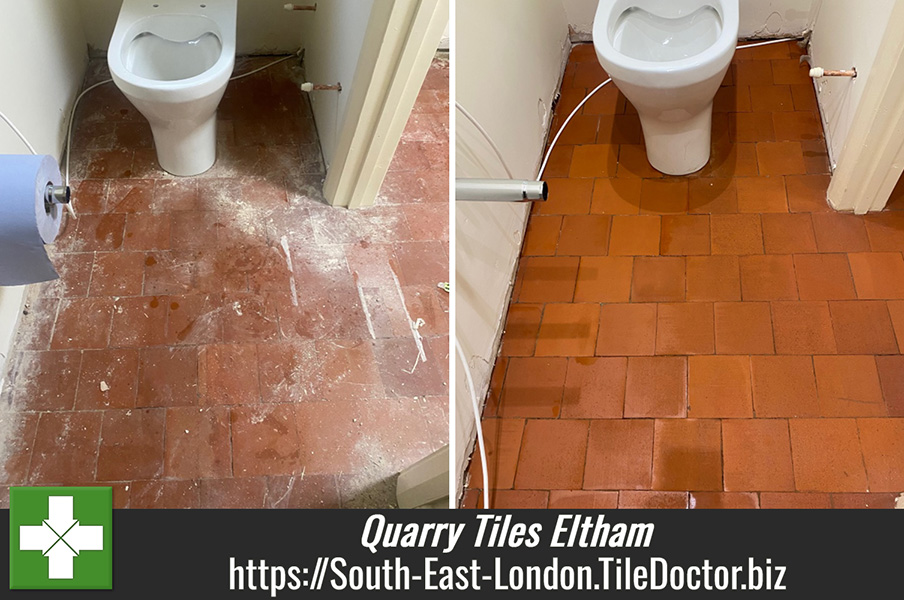
The completed floor has a much cleaner and more uniform appearance, with the rich red and orange tones of the original quarry tiles looking far more vibrant following the removal of the old paint and sealer.
 |
 |
The restoration has allowed the homeowner to retain an original feature of this 1930s Eltham property rather than replace it during the renovation. Preserving existing quarry tiles can help maintain the character of an older home while providing a practical floor for a modernised living space.
 |
 |
For aftercare I recommend the use of Tile Doctor Neutral Tile cleaner which is a mild yet effective tile cleaner that won’t impact the new sealer. Many supermarket cleaning products contain bleach and are simply too strong for use on a sealed floor as they can strip away the sealer.
Professional Quarry Tile Restoration Services across Southeast London
Restoring an Original Quarry Tiled Floor Following Remodel in Eltham Read More »